Fornax
The kiln between the pit kiln and the beehive kiln. Mud brick, firewood, and no iron at all.
Description
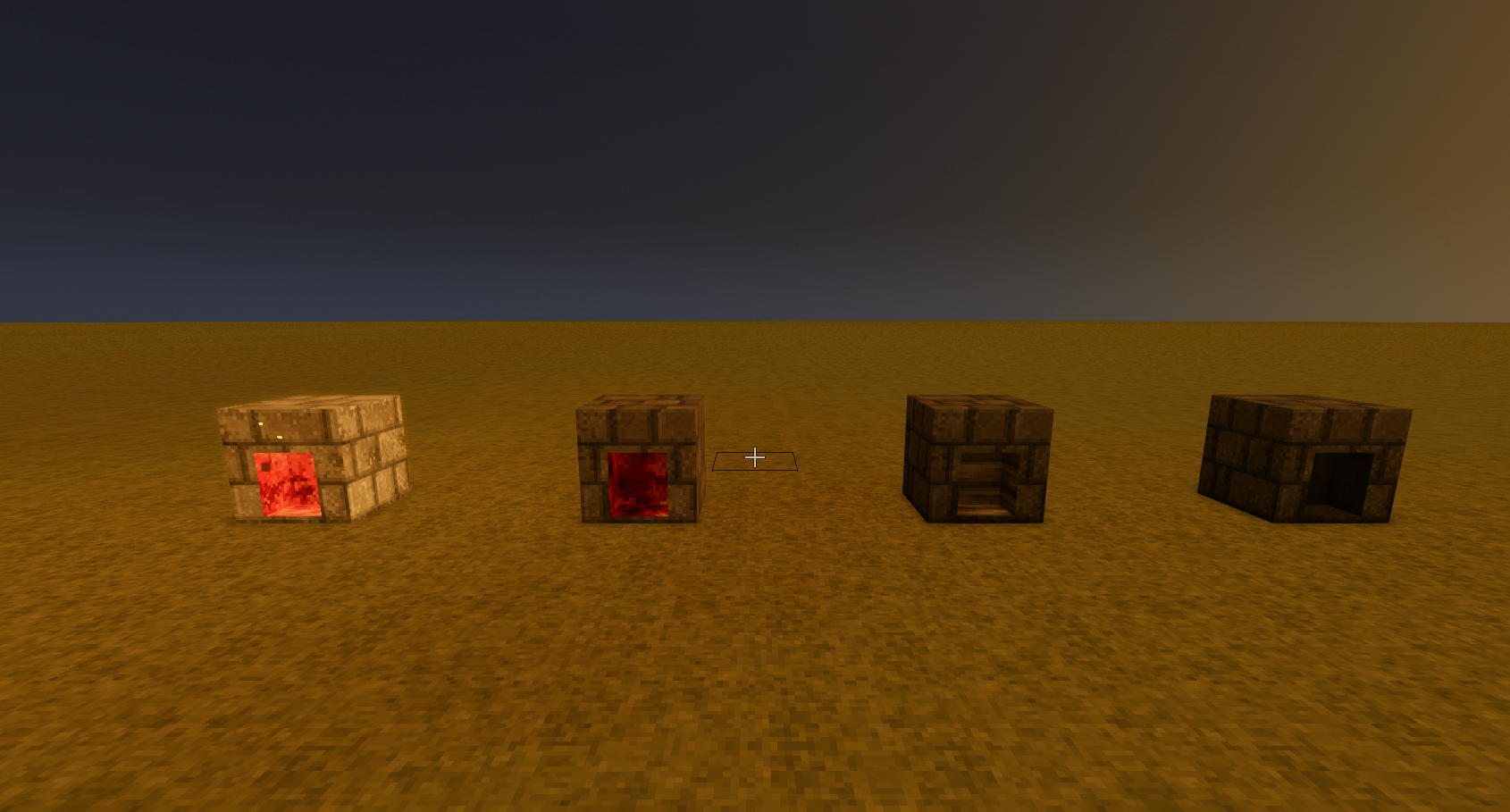
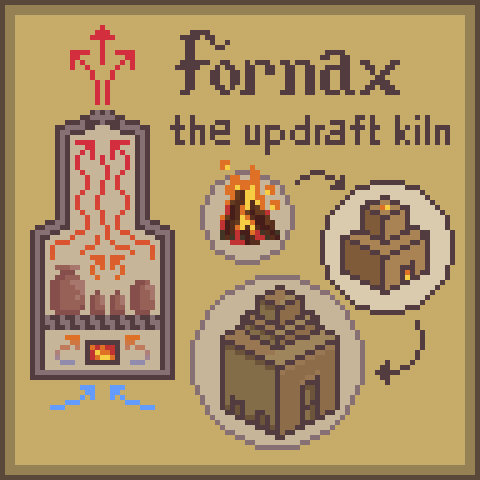
<p><strong>Fornax</strong> is Latin for furnace, and the name of the Roman goddess of the oven, a deity most likely invented to explain a festival that already existed. At the Fornacalia, on the seventeenth of February, spelt was parched for sacrificial cakes, and Romans prayed to Fornax to keep the grain from scorching. The word was borrowed once more in the 1750s, when Lacaille hung a chemical furnace among the southern stars.</p> <p><em>New: a second kiln in fired brick, with a copper-strapped wicket. Cheaper to run, slower to warm, and built out of what the first one fired. See below.</em></p> <p>This is the third borrowing, and the most literal. Between the pit kiln and the beehive kiln there is a long gap: the pit kiln fires four things at a time and eats firewood doing it, while the beehive kiln wants refractory/fireclay brick and an iron door, which means a bloomery first. Fornax is the kiln that goes in between: raw mud brick, a clay grate floor, firewood or peat, and <strong>no iron at all</strong>.</p> <p>What it buys you is <strong>batch size without iron</strong>, not cheap firing: thirty-six wares in one go against a pit kiln's four, at about the same fuel per ware. Raw brick is the exception and stays well ahead: a full grate is 216 of them.</p> <table> <tbody> <tr> <th> </th> <th>pit kiln</th> <th>updraft, mud</th> <th>updraft, brick</th> <th>beehive kiln</th> </tr> <tr> <td>wares per firing</td> <td>4</td> <td><strong>~36</strong></td> <td><strong>~36</strong></td> <td>~108</td> </tr> <tr> <td>fuel per firing</td> <td>4 firewood</td> <td><strong>30 firewood</strong></td> <td><strong>24 firewood</strong></td> <td>up to 144 coal</td> </tr> <tr> <td>fuel per ware</td> <td>1.0</td> <td><strong>0.83</strong></td> <td><strong>0.67</strong></td> <td>~1.3</td> </tr> <tr> <td>firing time</td> <td>20 h</td> <td><strong>8–13 h</strong></td> <td><strong>8–13 h</strong></td> <td>9 h</td> </tr> <tr> <td>clay per firing</td> <td>none</td> <td><strong>24 + 6 dirt</strong></td> <td><strong>2</strong></td> <td>none</td> </tr> <tr> <td>metal needed</td> <td>no</td> <td><strong>no</strong></td> <td><strong>copper</strong></td> <td>iron</td> </tr> </tbody> </table> <h3>Building it</h3> <p>A 5x5 mud brick drum around a 3x3x4 chamber, corbelled in to a chimney neck and a draft vent. Cob works anywhere mud brick does. Nine grate tiles form the floor the wares sit on; they are clay-formed and then fired in a pit kiln, so you use the older technology once to build the newer one.</p> <p>Place the firebox where you want the front to be (it turns to face you), then <strong>Ctrl + right-click</strong> it with an empty hand. A blueprint of ghost blocks shows everything still to place, drawn with each block's own texture so you can see what goes where, and red for anything in the way.</p> <h3>Firing</h3> <p>Load green pottery or raw bricks onto the grate as ordinary ground storage, seal the loading entrance with mud, fuel the firebox and light it. A batch costs a fixed amount of fuel energy whatever you burn; hotter fuel simply gets through it faster:</p> <ul> <li><strong>30 firewood</strong>: about 13 hours</li> <li><strong>29 peat bricks</strong>: about 8 hours</li> <li><strong>18 charcoal</strong>: about 6 hours</li> </ul> <p>The firebox tells you what it is doing from across the yard: dark when empty, firewood in the mouth when fuelled, glowing red coals while the chamber warms, and bright orange flame once it is up to temperature. Look at it for hours of burn remaining and firing progress.</p> <h3>The brick kiln</h3> <p>There are two of them. The mud kiln is what you build first, out of what the ground gives you. The <strong>brick kiln</strong> is the same drum and the same batch laid in fired brick, with a copper-strapped wicket where the mud one has six seals, and it is built out of what the first one fired. The mud kiln makes the brick, and the lime for the mortar the brick is laid with. Still no iron.</p> <p>It is deliberately not a bigger or a hotter kiln: common brick softens at about the temperature it was fired at, and a cob shell bakes its own inner face hard over its first few firings, so both sit in the same range. What mortared brick buys is a shell that does not leak. <strong>24 firewood a batch instead of 30</strong>. The price is mass. There is more of it to bring up to heat and more of it holding that heat afterwards, so it warms slowly and cools slowly: a poor kiln fired once and left, and the best one in the game fired batch after batch.</p> <p>The wicket is two brick panels strapped in copper or bronze, which is vanilla's own kiln door one metal tier down. The strapping sits on the outer face, where a thick brick panel keeps it hundreds of degrees below its melting point. The panels are permanent. What seals them is a bead of clay luted round the joint, one clay each, and the fire burns that luting out again, so a finished batch swings its own wicket open. <strong>Two clay a firing against the mud kiln's twenty-four and six dirt</strong>, and nothing to break to get the wares out.</p> <h3>Opening it early</h3> <p>Break a seal while the kiln is hot and thermal shock shatters part of the load: nothing below 450°C, up to about half the batch at full heat. That threshold is exactly when the firebox turns from red to orange, so the colour is the warning. Whatever survives keeps the heat it has taken, and a repaired kiln picks up where it left off.</p> <p>The mud seals crack in every firing and must be replaced, which is the mud kiln's running cost: throughput and fuel economy paid for in clay rather than firewood. The brick kiln pays that once, in copper, and a clay a panel thereafter.</p> <h3>Notes</h3> <ul> <li>Full handbook entry, in the style of the vanilla kiln pages.</li> <li>Works with any modded clay ware: anything the game can fire, this fires.</li> <li><strong>XSkills</strong>: a firing counts towards the Pottery skill, credited to whoever lit the kiln, at 75% of what
Ratings & reviews
Sign in to leave a rating or comment.