Description
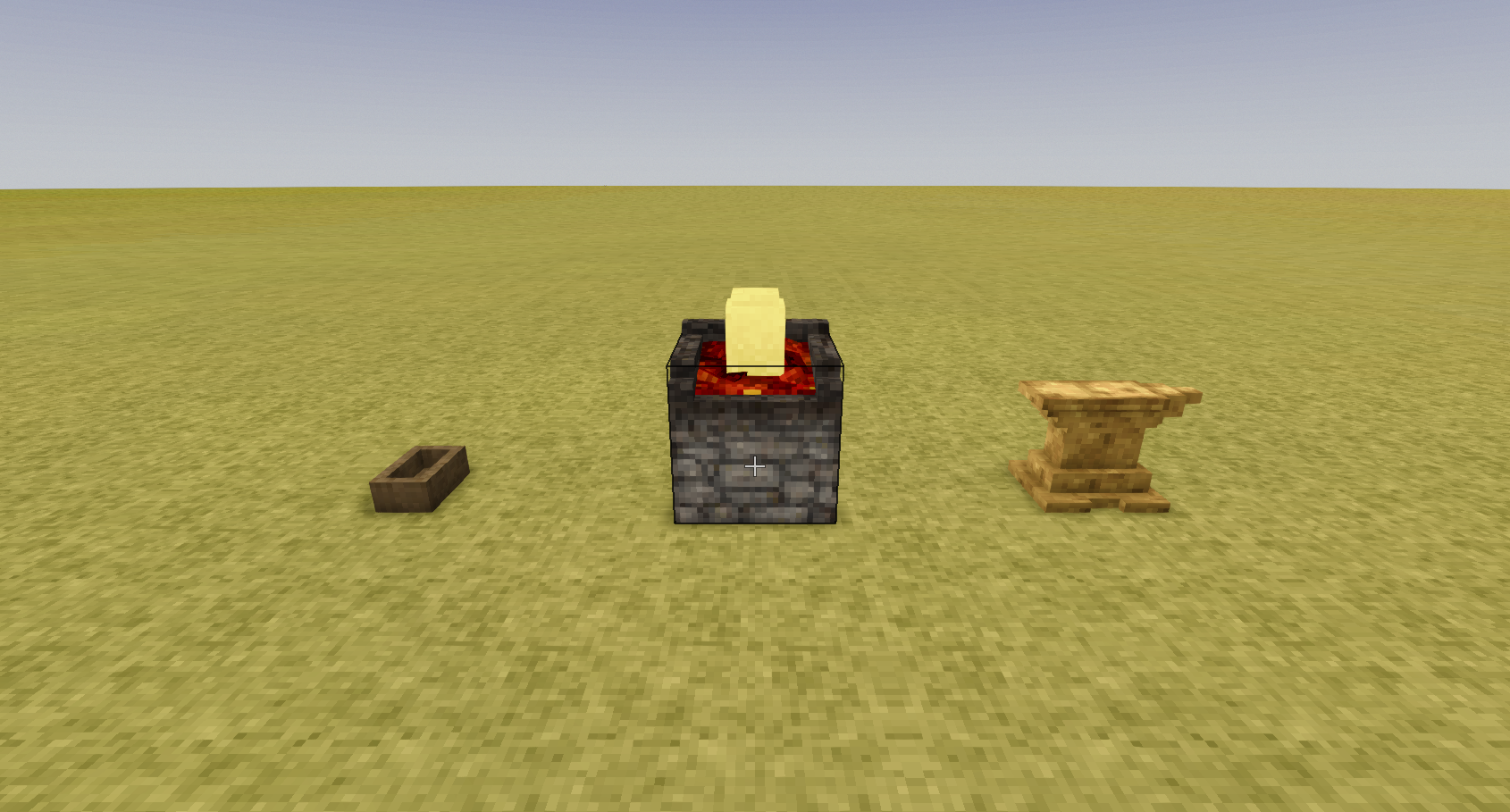
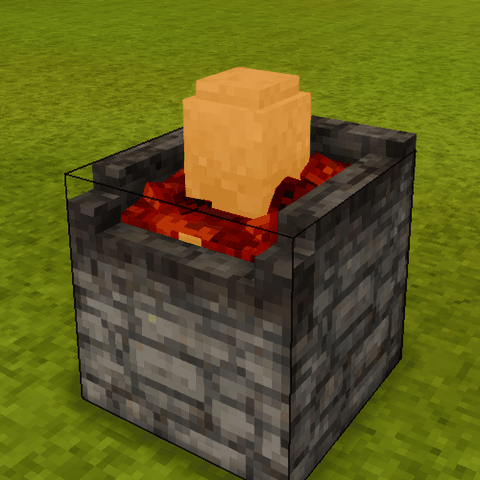
<p><strong>Crucibulum</strong> is the Medieval Latin word English took “crucible” from. It meant the little melting pot, and it also meant a night lamp, the same small vessel holding the same small fire, put to two uses. The figurative sense came out of the metal and not the other way round: a crucible was a pot for a very long time before it was a trial by fire.</p> <p>This mod is the literal one. Vanilla asks you to keep two fires: the firepit melts, the forge smiths, and you walk between them. The 1.22 forge is the better fire — fuel types that matter, a bellows that drives the temperature — and it stands idle between heats. Crucibulum allows you to put a crucible in it!</p> <table style="border-collapse: collapse; width: 39.1089%; height: 141.367px; border-spacing: 10pxpx;" cellpadding="10px"> <tbody> <tr style="height: 20.1953px;"> <th style="width: 38.6882%; height: 20.1953px;"> </th> <th style="width: 29.3%; height: 20.1953px;">firepit</th> <th style="width: 32.0131%; height: 20.1953px;">forge + crucible</th> </tr> <tr style="height: 20.1953px;"> <td style="width: 38.6882%; height: 20.1953px;">melts</td> <td style="width: 29.3%; height: 20.1953px;">yes</td> <td style="width: 32.0131%; height: 20.1953px;"><strong>yes</strong></td> </tr> <tr style="height: 20.1953px;"> <td style="width: 38.6882%; height: 20.1953px;">ceiling</td> <td style="width: 29.3%; height: 20.1953px;">fuel burn temp</td> <td style="width: 32.0131%; height: 20.1953px;">1200 °C</td> </tr> <tr style="height: 20.1953px;"> <td style="width: 38.6882%; height: 20.1953px;">smith at the same fire</td> <td style="width: 29.3%; height: 20.1953px;">no</td> <td style="width: 32.0131%; height: 20.1953px;"><strong>yes</strong></td> </tr> <tr style="height: 20.1953px;"> <td style="width: 38.6882%; height: 20.1953px;">700 units of tin bronze</td> <td style="width: 29.3%; height: 20.1953px;">6.6 coke</td> <td style="width: 32.0131%; height: 20.1953px;"><strong>5.4 coke</strong></td> </tr> <tr style="height: 20.1953px;"> <td style="width: 38.6882%; height: 20.1953px;">keeping a melt liquid</td> <td style="width: 29.3%; height: 20.1953px;">same as melting</td> <td style="width: 32.0131%; height: 20.1953px;"><strong>a third of melting</strong></td> </tr> <tr style="height: 20.1953px;"> <td style="width: 38.6882%; height: 20.1953px;">nickel (1325 °C)</td> <td style="width: 29.3%; height: 20.1953px;">yes</td> <td style="width: 32.0131%; height: 20.1953px;">no</td> </tr> </tbody> </table> <p> </p> <p>The firepit keeps the top of the range. A crucible in a forge is clamped at 1200 °C, so nickel still wants a firepit, and iron is still bloomery work.</p> <h3>Using it</h3> <p><strong>Right-click</strong> the forge with a crucible to set it in, or shift-right-click — either works, as at a firepit. <strong>Right-click</strong> a forge that has a crucible in it to open the crucible window; <strong>shift-right-click with an empty hand</strong> to take the crucible back out. Ore and ingots go in through the window, and fuel goes on the forge the way it always has.</p> <p><strong>Smithing is untouched.</strong> A forge holding an ingot hands it over on a plain right-click exactly as it always did, and burns fuel at exactly the rate it always did.</p> <h3>The window</h3> <p>Laid out like the firepit's, because that is the one you already know. What it adds is the blend — each metal's share of the melt, quoted in the same units alloy recipes are written in, so twenty nuggets and one ingot weigh the same:</p> <p><code>Copper 90% · Tin 10%<br>Will create 100 units of Tin bronze</code></p> <p>Get the ratio wrong and vanilla tells you nothing at all, which looks exactly like a mix that is fine but cold. Crucibulum is a little clearer:</p> <p><code>Copper 40% · Tin 60%<br>These will not combine<br>Tin bronze needs Tin 8-12%, Copper 88-92%</code></p> <p>If the metals make no alloy at all it says they will not combine and quotes no ratio, rather than sending you after a recipe that does not exist. The temperature line carries what it is climbing towards — <em>900°C · melts at 1084°C</em> — and drops the target once the metal is going. All of it is in the block info too, so you need not open anything for the common case.</p> <h3>Heat</h3> <p>A charge comes up to temperature, melts, and is then held. Each is different work for the fire.</p> <p>The climb is proportional to how far there is left to go, so it is brisk while the crucible is cold and eases in over the last stretch. <strong>More metal climbs more slowly</strong> — the same fire poured into a brim-full crucible takes over three times as long as into an empty one. While the charge is actually melting the temperature all but stops rising, which is latent heat: the energy is going into changing the metal's state rather than raising its temperature.</p> <ul> <li><strong>20 nuggets</strong> — 61s to temperature, then 30s melting</li> <li><strong>60 nuggets</strong> — 92s, then 90s</li> <li><strong>140 nuggets</strong> — 153s, then 210s (a full 700-unit crucible)<br><br></li> </ul> <p>Tip cold ore into a hot crucible and you cool the whole lot, weighted against what is already in there — so topping up a nearly-molten crucible genuinely sets you back.</p> <p>Once the metal is liquid the fire is only replacing what the crucible loses to the air, so <strong>holding a melt costs about a third of what making it did</strong>. One lump of coke lasts 67 seconds while melting and 190 while holding, against 240 in an empty forge. Let it go solid and it is a full melt to do again.</p> <h3>Fuel</h3> <p>What you burn decides what you can melt, unaided:</p> <ul> <li><strong>coke</strong> — 1200 °C, up to cupronickel</li> <li><strong>charcoal</strong> — 1150 °C, up to copper</li> <li><strong>bituminous coal, anthracite</strong> — 1100 °C, up to copper</li> <li><strong>lignite</strong> — 1000 °C, up to silver</li> <li><strong>contaminated coal</strong> — 900 °C, up to bismuth bronze</li> </ul> <p>Anything
Ratings & reviews
Sign in to leave a rating or comment.